Got your hands on a vintage Coach bag? Whether you scored it thrifting, inherited it from a stylish relative, or rediscovered it tucked away in the back of your closet, you’re holding a piece of timeless craftsmanship. But let’s be honest—time might not have been so kind to it. If that leather could talk, it’d probably ask for a little TLC.
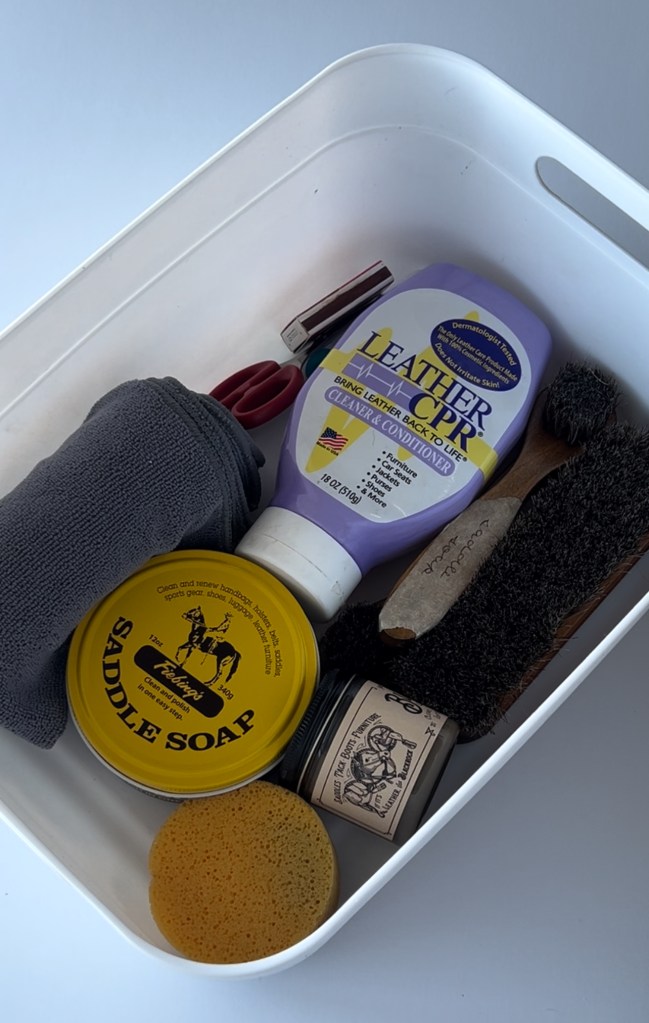
Not sure what you need to get started? Don’t worry! Here are some of the basics:
Affiliate Disclosure
Some of the links on this blog are affiliate links. This means that if you click on the link and make a purchase, I may earn a commission at no additional cost to you. Rest assured, I only recommend products that I believe in and think will add value to your vintage bag restoration journey. Thank you for supporting my work!
What You’ll Need:
- Fiebing’s Saddle Soap
- Leather CPR
- Blackrock Leather ‘N’ Rich
- Tack Sponges
- Horse Hair Brushes
- Mircofiber Towels
- Scissors
- Distilled Vinegar
- Spray Bottle
- Toothbrush
- Lighter/Matches
- Vacuum
- Newspaper
- Distilled Water
- Cup
- Used Dryer Sheet
- Zipper Lubricant (Optional)
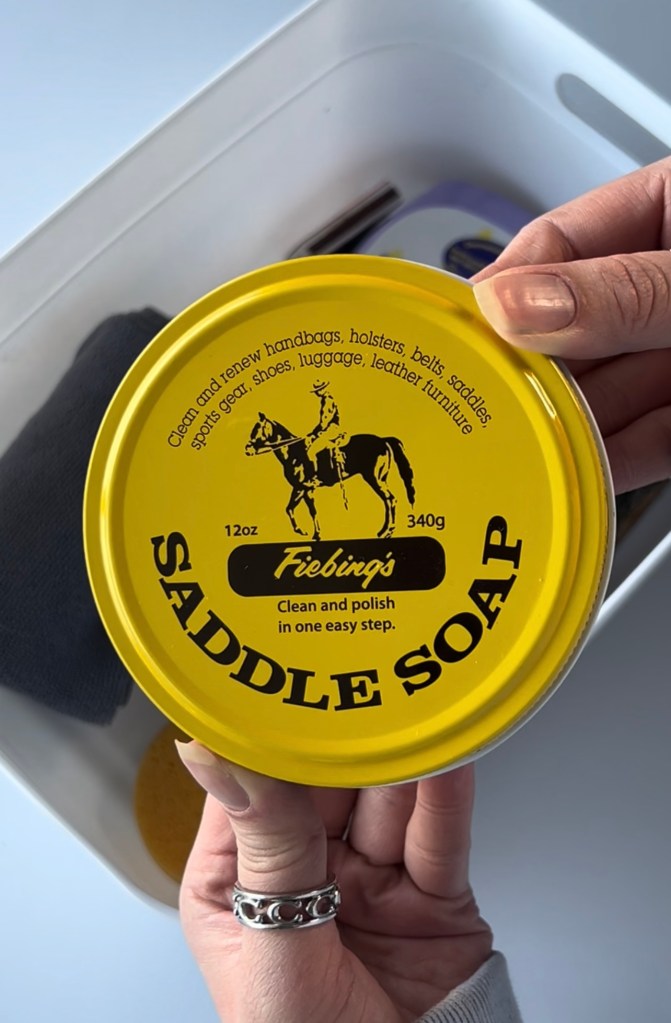
Fiebing’s Saddle Soap $8.10 on Amazon
Saddle soap is designed to remove dirt, grime, and old buildup from leather. Use this when your bag is dirty!
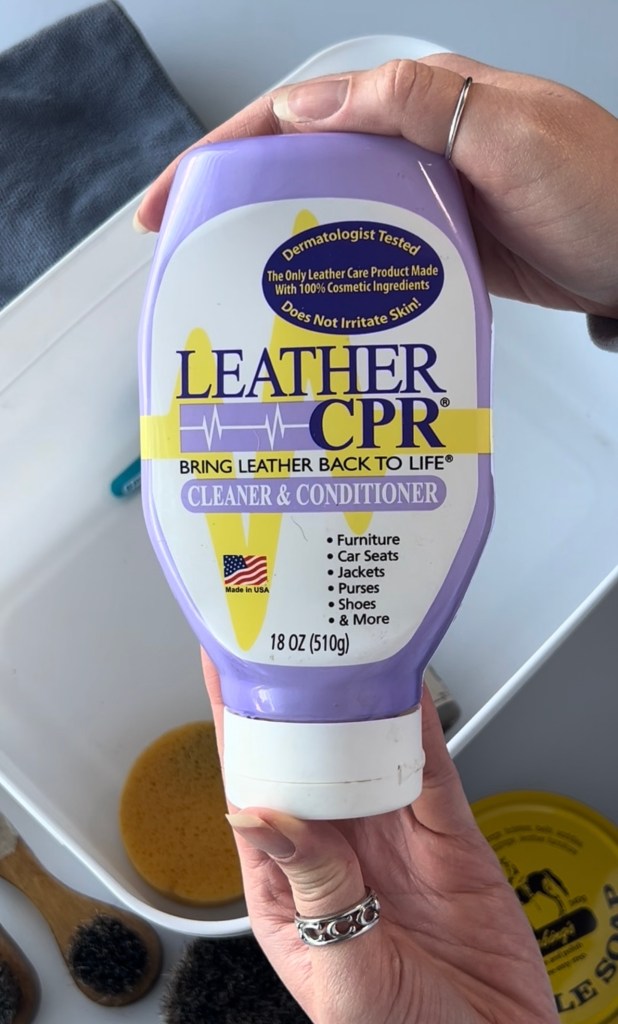
Leather CPR
$25.95 on Amazon
If you can only purchase one product for your restoration, I highly recommend Leather CPR. It’s all-in-one product that can clean and condition your bag. It’s pricey on Amazon. If you have a Tractor Supply near you, pick it up from there!

Blackrock Leather ‘N’ Rich
$11.95 on Amazon
Tack Sponges
$8.99 On Amazon
Blackrock Leather ‘N’ Rich is amazing. I like to this to “seal” my leather CPR—focusing on the edges and corners. To use, apply a small amount with a tack sponge and buff it out with a horse hair brush to bring out it’s natural glow. A little goes a LONG way!
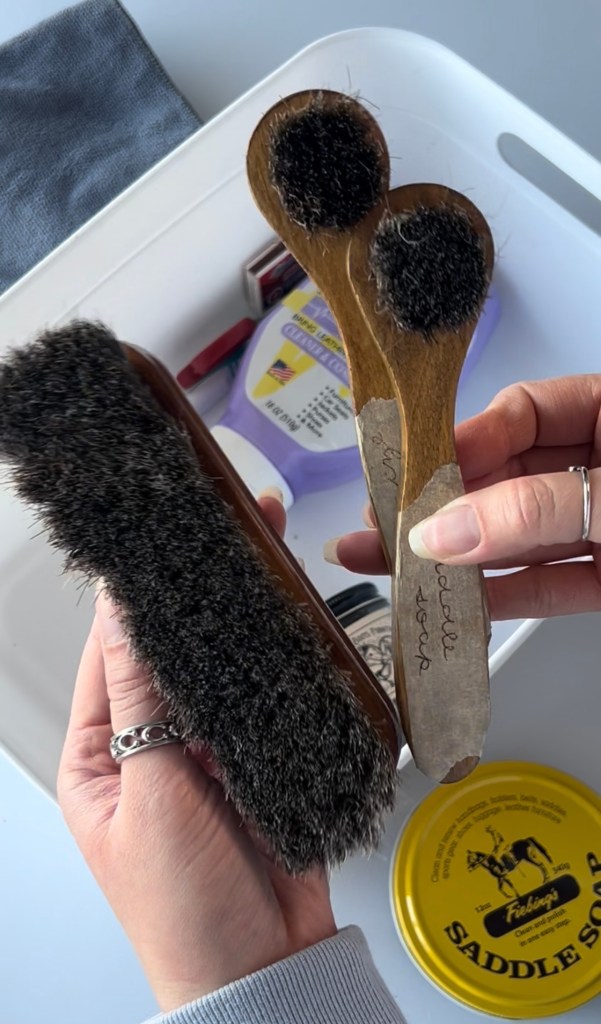
Horse Hair Brushes
$8.79 on Amazon
Horsehair bristles are soft yet effective so you don’t have to worry about scratching or damaging your bag. Buffing with a horsehair brush ensures even distribution of product and removes any excess product that could leave the leather sticky or dull. Amazon sells them in a pack of three—two small one large. I use one small one for lathering up saddle soap and the other two for buffing out Leather CPR and Blackrock. I labeled them with some painters tape.
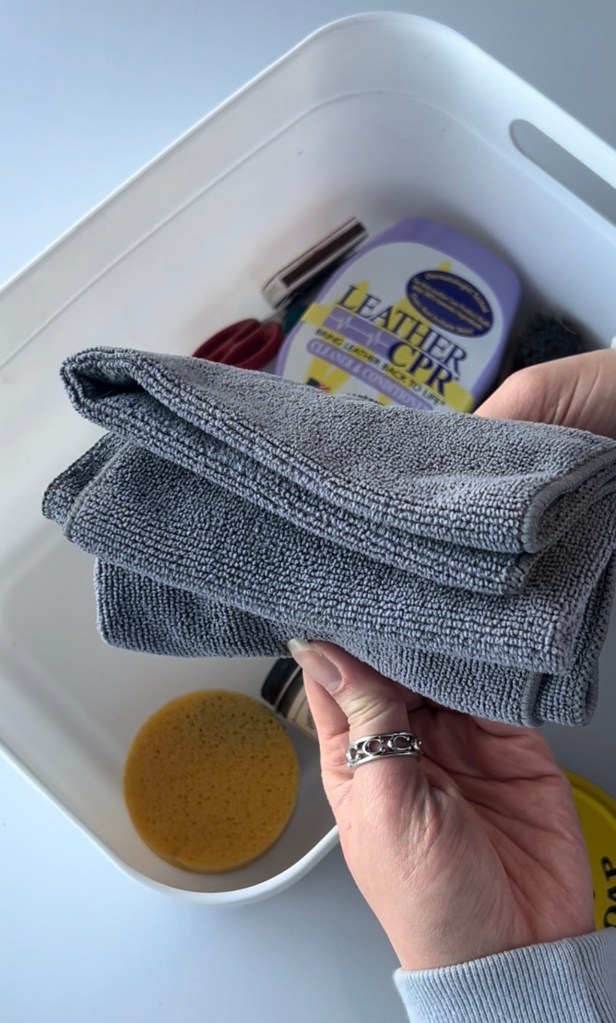
Mircofiber Towels
$9.99 on Amazon
Microfibers are crucial for the cleaning process. I dampen them to clean off the saddle soap and sometimes even use them to stuff my bags to fix their shape!

Scissors
$9.99 on Amazon
Always nice to have on hand to cut off tags or snip off threads if you’re not comfortable singeing it off with a lighter or match!

Distilled Vinegar
$16.99 on Amazon
Spray Bottle
$7.96 on Amazon
Use this to treat mold. Do not dillute. Every bag that ends up in my possession gets mold treated even if there are no visible mold spores. It’s better to be safe than sorry. Active mold can infect other bags and be devastating. Mold scars are not removable. Take your bags outside, use a spray bottle and thoroughly spray the inside and outside. Use a mircofiber towel to wipe down the outside to even out the application then let your bags sunbathe. No sun? Vinegar alone will work too.
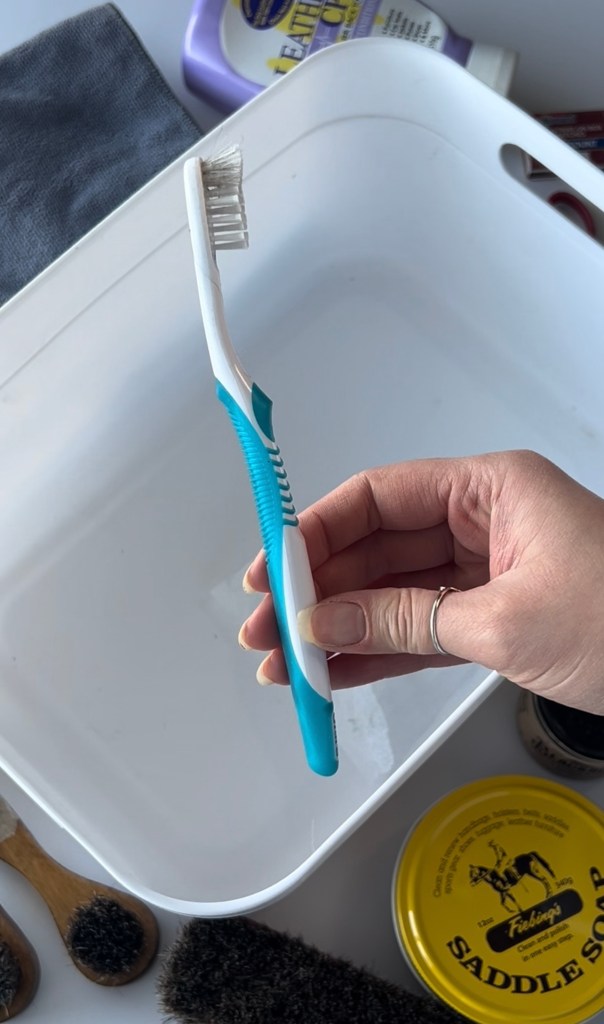
Toothbrush
$8.98 on Amazon
I often am asked how to clean the inside of a bag. For minor cleaning, I use a toothbrush that I’ve dedicated to restorations to loosen up crumbs and dirt on the inside of the bag and then I vacuum it out. Flipping the bag over and shaking out the debris always works too.
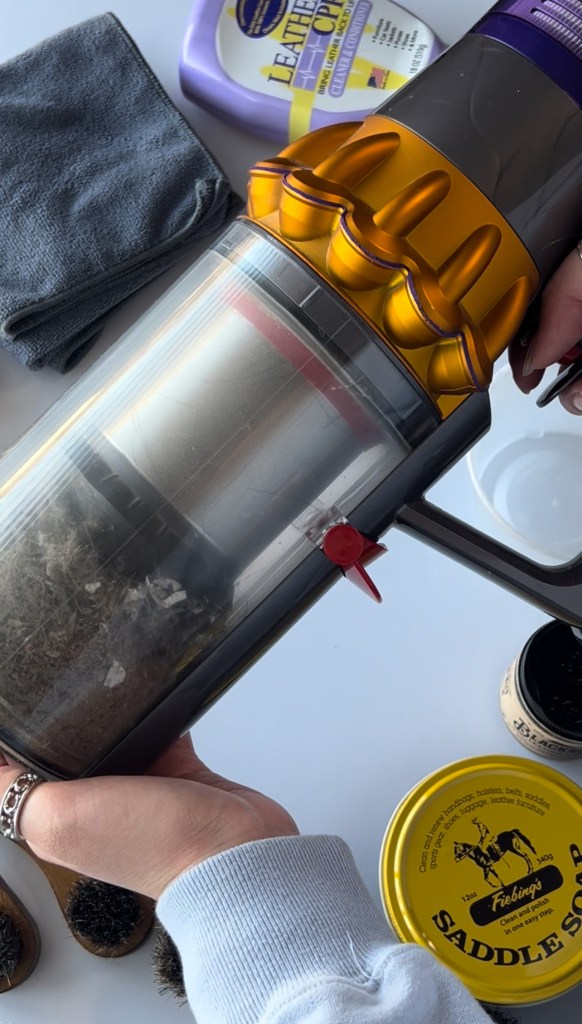
Vacuum
$599.95 on Amazon
I use my Dyson v15 to vacuum out by bags but obviously use what you have! Do not buy this just for you bag restorations! Or do? You make the rules!

Matches
OR
Electric Lighter
$9.99 on Amazon
I like to burn away loose threads. When you burn the loose threads, the heat melts the fibers slightly, sealing the ends and preventing further unraveling. This keeps the stitching intact and prevents small issues from becoming bigger ones. It’s a quick and efficient!
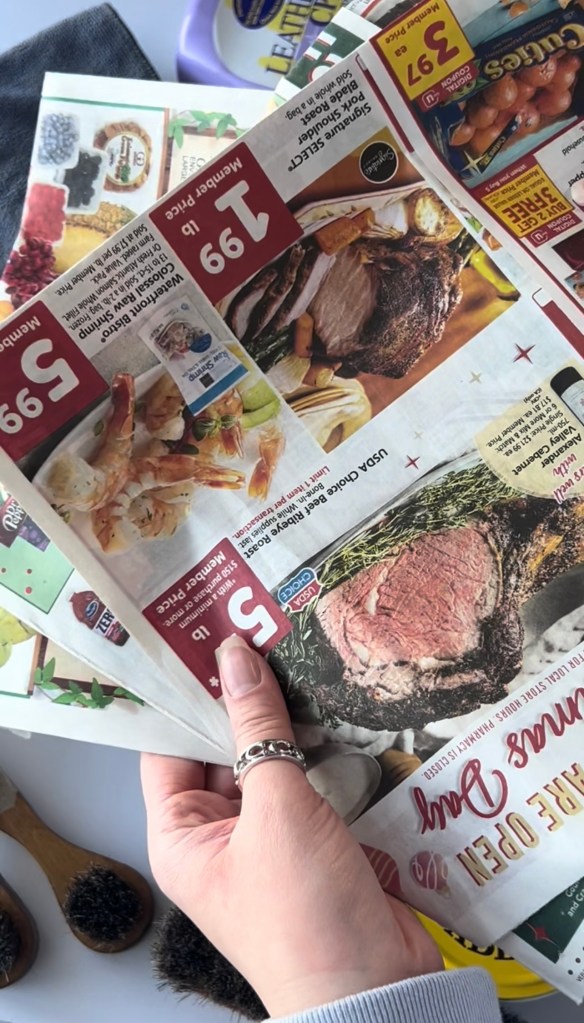
Newspaper
Use what you have!
I use my junk mail and promotional newsprint to stuff my bags and reshape them as I restore. Free and effective!
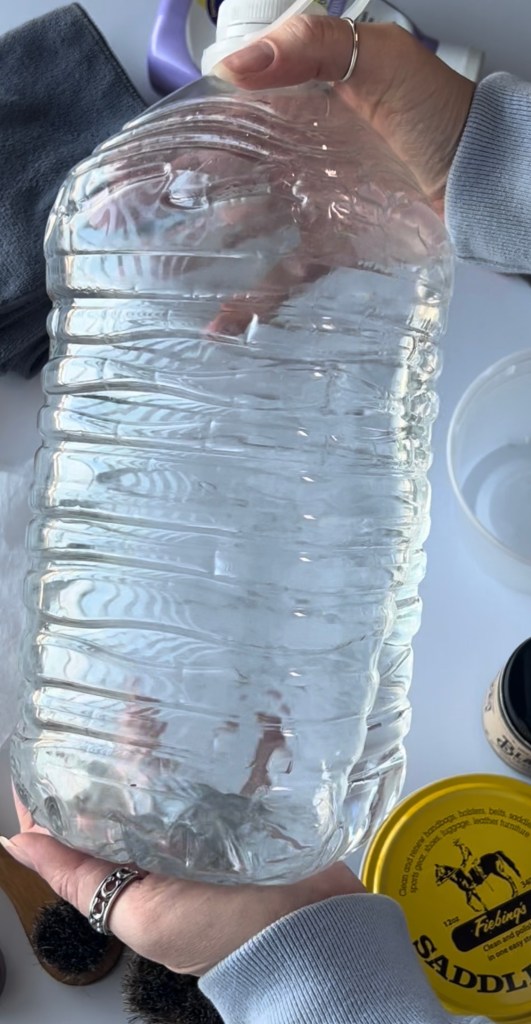
Distilled Water
$14.99 on Amazon
Distilled water is ideal for restorations because it is free of minerals, chemicals, and impurities that can harm leather. Unlike tap water, it won’t leave streaks, stains, or residue, and it prevents reactions with leather care products. Its purity ensures gentle cleaning, enhances product effectiveness, and helps maintain the leather’s smooth, clean finish. For the best results, always use distilled water when cleaning, diluting products, or rinsing during restoration.
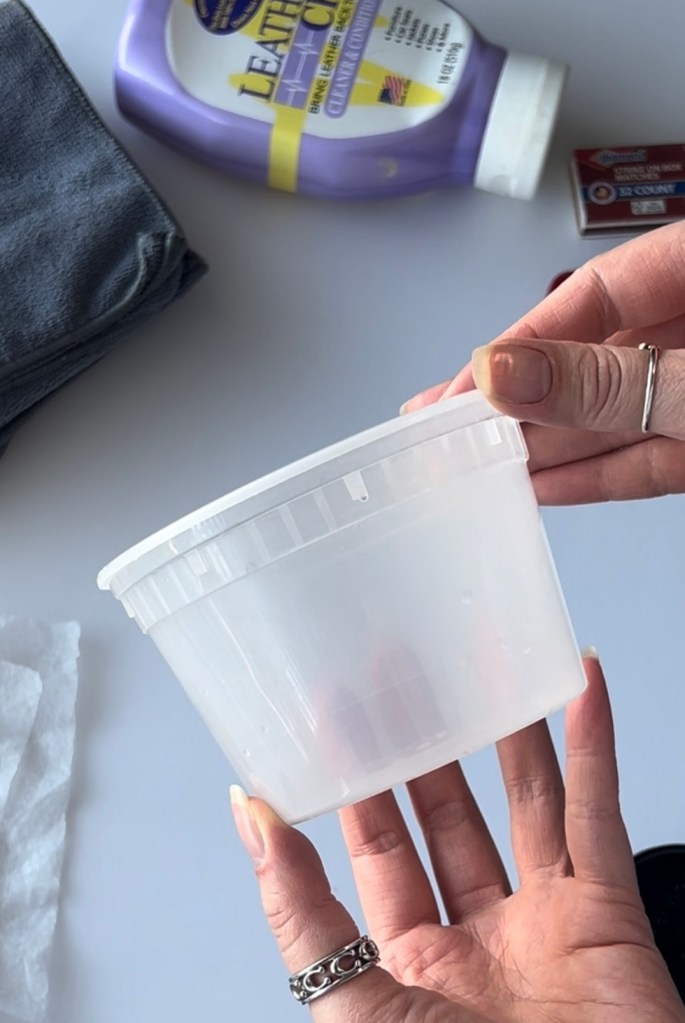
To hold your distilled water. (: Use what you have! I use a deli container.
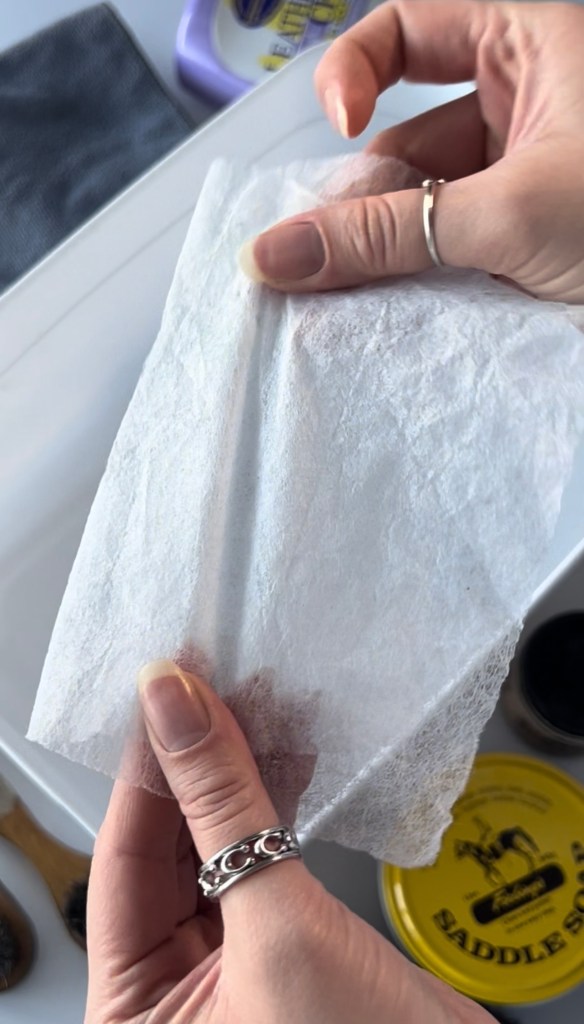
Save your used dryer sheets to remove verdigris. Verdigris is the green or bluish-green patina that forms on copper, brass, or bronze due to exposure to moisture, air, and other environmental elements over time. It’s essentially a layer of corrosion that develops when the metal reacts with oxygen, carbon dioxide, or salts in the environment. It can feel a little sticky. Used dryer sheets wipe away verdigris effortlessly.
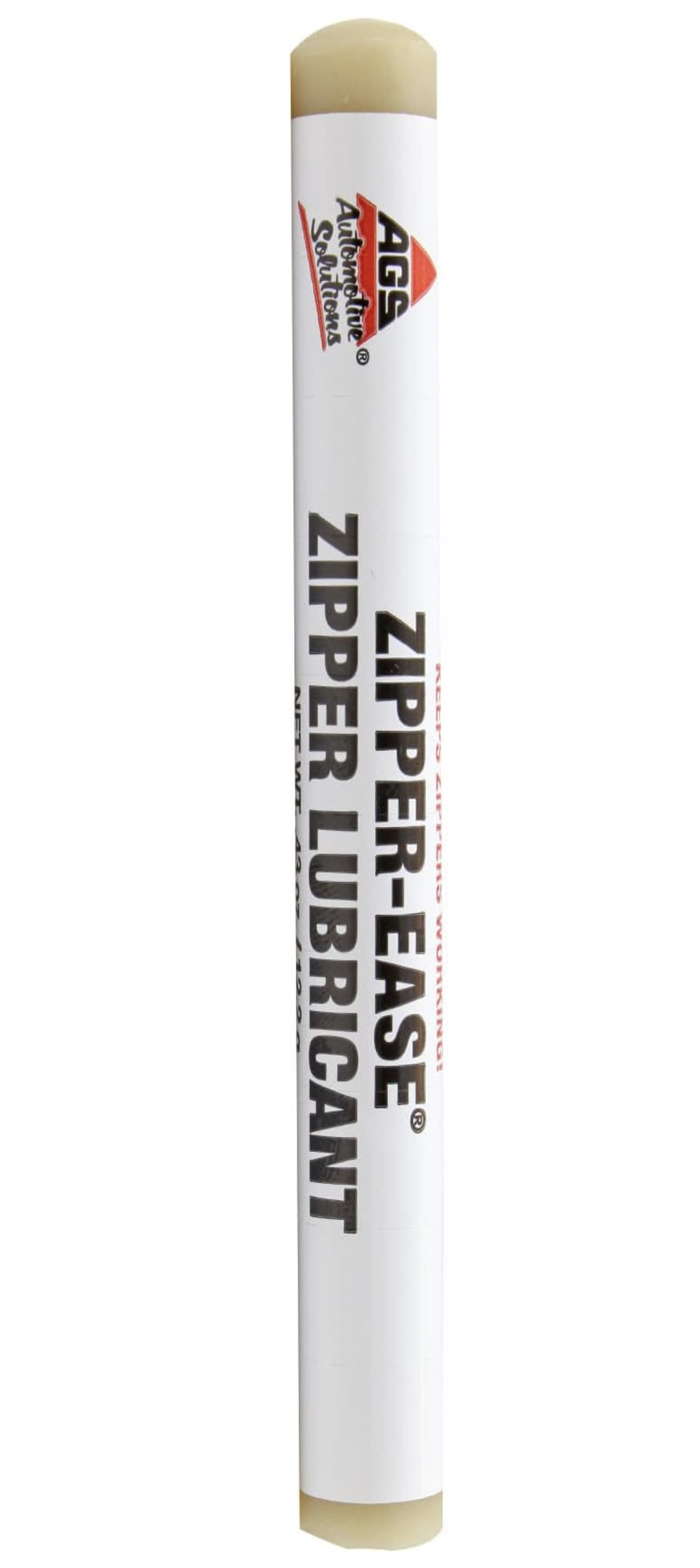
Zipper Lubricant
$6.99 on Amazon
This is definitely optional but since I got a lot of questions about it, I thought it made sense to include it in this list. Over time, zippers can become stiff or difficult to operate due to dirt, oxidation, or wear. Zipper lube reduces friction, allowing the zipper to glide smoothly again. No one likes a zipper that snags!
And there you have it—the basic tools to kick off your vintage Coach restoration journey. With these tools in hand, you’re ready to breathe new life into your bags. Whether you’re tackling scuffs, cleaning up hardware, or giving that leather some much-needed love, you’ve got everything you need to make your bag shine again.
Yours Truly,
Doolie
 Doolie
Leave a comment